Course Details

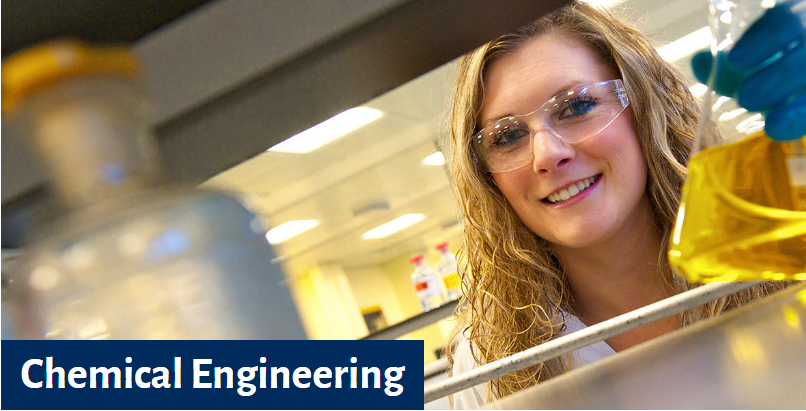
Chemical Engineering BEng

A Chemical Engineering BEng (Bachelor of Engineering) degree is an undergraduate program focused on the application of chemistry, biology, physics, mathematics, and engineering principles to design, optimize, and manage processes for the production of chemicals, energy, materials, and other industrial products.

Key Areas of Study in a Chemical Engineering BEng Program:

  1. Core Engineering Principles:
    • Thermodynamics: Understanding the energy transformations in chemical processes.
    • Fluid Mechanics: Study of fluid flow, pumps, and pipeline systems.
    • Heat and Mass Transfer: How heat and mass move within systems (essential for reactors, distillation columns, etc.).
    • Reaction Engineering: Study of chemical reactions and how they are controlled in industrial processes.
    • Process Control: How to regulate and maintain the efficiency of chemical processes.
  2. Advanced Topics:
    • Biochemical Engineering: Application of chemical engineering principles to biological systems (used in pharmaceuticals, food industries, etc.).
    • Materials Science: Study of materials and their properties in relation to chemical engineering.
    • Environmental Engineering: Addressing waste management, sustainability, and the impact of industrial processes on the environment.
    • Industrial Safety: Ensuring processes are safe for workers and the environment.
  3. Practical Skills:
    • Laboratory Work: Hands-on experiments to apply theoretical knowledge.
    • Simulation Software: Using tools like MATLAB, Aspen Plus, or COMSOL for process simulation and design.
    • Design Projects: Applying theoretical knowledge to real-world industrial scenarios, often culminating in capstone design projects.
    • Internships or Work Experience: Opportunities for practical industry experience.
  4. Mathematics and Computing:
    • Advanced mathematical methods for solving engineering problems.
    • Programming for process design, modeling, and optimization (common languages include Python, MATLAB, etc.).

Career Opportunities:

Graduates of a Chemical Engineering BEng program can pursue careers in industries such as:

  • Petroleum and Energy: Designing and improving processes for oil, gas, and renewable energy production.
  • Pharmaceuticals: Developing processes for drug manufacturing.
  • Environmental and Sustainability Engineering: Working on waste treatment, pollution control, and resource management.
  • Food and Beverage: Designing processes for large-scale food production and safety.
  • Materials Manufacturing: Involved in the production of polymers, metals, and advanced materials.


Course Overview

Skills Developed:

  • Problem-solving and analytical thinking.
  • Technical proficiency with equipment and software.
  • Strong foundation in mathematics and sciences.
  • Teamwork and project management skills.
  • Communication skills, especially in technical writing and presenting.

Chemical Engineering program:

Year 1: Foundation Year

  • Mathematics for Engineers: Introduction to calculus, linear algebra, and differential equations.
  • Chemistry for Engineers: Basic concepts in chemistry, including organic, inorganic, and physical chemistry.
  • Physics for Engineers: Principles of mechanics, thermodynamics, and fluid mechanics.
  • Introduction to Chemical Engineering: Overview of the chemical engineering profession, including process design and industrial applications.
  • Introduction to Programming and Computing: Basics of programming, often using languages like Python or MATLAB, focused on solving engineering problems.
  • Material Science: Understanding the properties of materials, including metals, polymers, and composites.
  • Engineering Drawing: Basic skills in technical drawing and CAD (Computer-Aided Design).

Year 2: Core Engineering Subjects

  • Fluid Mechanics: Study of the behavior of fluids at rest and in motion, relevant to chemical processes.
  • Heat Transfer: Methods of transferring heat in various systems, essential for designing reactors and other equipment.
  • Mass Transfer: Diffusion, mass flow, and separation processes (e.g., distillation, absorption).
  • Thermodynamics: Principles governing energy and its transformations in chemical processes.
  • Reaction Engineering: Understanding chemical reactions, reactor design, kinetics, and catalysis.
  • Process Control: Introduction to controlling industrial processes using various control strategies.
  • Engineering Mathematics: More advanced mathematical methods for solving engineering problems (e.g., partial differential equations, Fourier series).

Year 3: Advanced Chemical Engineering

  • Process Design and Simulation: Tools and techniques for designing chemical plants and simulating processes using software like Aspen Plus or MATLAB.
  • Separation Processes: Advanced topics in distillation, filtration, membrane processes, and other separation techniques.
  • Chemical Process Safety: Study of safety procedures, hazard analysis, and risk management in chemical plants.
  • Environmental Engineering: Topics covering waste treatment, pollution control, and sustainable practices in chemical engineering.
  • Transport Phenomena: Advanced study of momentum, heat, and mass transfer in engineering systems.
  • Advanced Reaction Engineering: Topics in complex reaction systems, including biochemical and environmental reactions.
  • Industrial Practice / Laboratory Work: Hands-on work, including lab experiments and potentially industrial placements.

Year 4: Specialization and Final Project

  • Advanced Topics in Chemical Engineering: Specialized subjects that may include biotechnology, nanotechnology, polymer science, or renewable energy.
  • Process Simulation and Optimization: Techniques to optimize industrial processes for efficiency, cost-effectiveness, and sustainability.
  • Capstone Project / Dissertation: A final-year research project where students apply their knowledge to solve a real-world engineering problem. Often involves lab work or a comprehensive design project.
  • Electives: Students may have the opportunity to choose from a variety of electives in fields like energy, materials, or environmental engineering.

Applicants should normally have one of the following:

  • As & A Levels,
  • A Level 4 diploma or Year 1 Bachelor Degree or any equivalent overseas qualification
  • Or an academic or professional qualification at degree equivalent level

If English is not your first language, you will also need to demonstrate your English Language proficiency. For example, you should have IELTS 7.5 overall with a minimum of 6.5 in all components.


USA, UK & EU students, 2024/25 (per year)


USD 8,500

International students starting 2024/25 (per year)


USD 13,100


Assessment


You’ll show your progress through a combination of written essays, problem-solving assignments and presentations.

All students take our core modules, but please note that the availability of optional modules is subject to demand.


Bachelor of Science (BSc) in Chemical Engineering provides a strong foundation for various career opportunities in diverse industries. Chemical engineering graduates possess skills in chemistry, physics, biology, mathematics, and engineering, which make them highly employable across multiple sectors. Below are some areas where employability is strong for BSc Chemical Engineering graduates:

1. Chemical Industry

  • Job Roles: Process Engineer, Production Engineer, Quality Control Specialist, Chemical Safety Analyst, Research & Development Engineer
  • Companies: Chemical manufacturing companies (e.g., Dow Chemical, BASF, ExxonMobil, Shell)
  • Tasks: Involves designing, optimizing, and troubleshooting chemical processes used in the production of chemicals, pharmaceuticals, fuels, and materials.

2. Oil and Gas Industry

  • Job Roles: Petroleum Engineer, Reservoir Engineer, Refining Engineer, Process Safety Engineer
  • Companies: Shell, BP, Chevron, Schlumberger, Halliburton
  • Tasks: Designing systems for extracting, refining, and transporting oil and natural gas products, ensuring processes are efficient and safe.

3. Pharmaceuticals and Biotechnology

  • Job Roles: Pharmaceutical Engineer, Bioprocess Engineer, Regulatory Affairs Specialist
  • Companies: Pfizer, Novartis, Roche, GSK
  • Tasks: Developing and scaling up production processes for drugs and biologics, ensuring compliance with regulatory standards, and managing safety in manufacturing.

4. Environmental Engineering

  • Job Roles: Environmental Consultant, Waste Management Engineer, Sustainability Specialist
  • Companies: Environmental agencies, waste treatment companies, sustainability-focused firms
  • Tasks: Developing technologies for waste management, water treatment, pollution control, and implementing sustainable practices in industrial operations.

5. Energy Sector

  • Job Roles: Renewable Energy Engineer, Energy Efficiency Analyst, Power Plant Engineer
  • Companies: Siemens Energy, General Electric, solar and wind energy companies
  • Tasks: Working on energy production, optimization of renewable energy systems, and researching new sources of energy.

6. Materials and Nanotechnology

  • Job Roles: Materials Scientist, Process Development Engineer, Nanotechnology Engineer
  • Companies: Advanced materials companies, nanotechnology research labs, semiconductor industry
  • Tasks: Research and development of new materials for use in various applications, including electronics, renewable energy, and medical devices.

7. Consulting and Research

  • Job Roles: Chemical Engineering Consultant, Researcher, Data Analyst
  • Companies: Consulting firms (e.g., McKinsey, Deloitte, Accenture), research institutions, universities
  • Tasks: Providing expert advice on process improvements, designing research studies, analyzing industry data to improve systems or address challenges.

8. Manufacturing and Process Design

  • Job Roles: Manufacturing Engineer, Process Design Engineer, Automation Specialist
  • Companies: Manufacturing plants, automotive companies, automation solution providers
  • Tasks: Designing and optimizing processes for mass production, integrating automation, and improving efficiency and cost-effectiveness.

9. Sales and Marketing in Technical Fields

  • Job Roles: Technical Sales Engineer, Product Manager, Marketing Analyst
  • Companies: Chemical equipment suppliers, industrial machinery manufacturers
  • Tasks: Selling chemical engineering solutions, products, or services, liaising with clients, and explaining the technical benefits of products.

10. Further Education

  • Graduates may pursue Master's degrees (e.g., in Chemical Engineering, Business Administration, Environmental Engineering) or PhD programs for specialized research positions or academic roles.
  • Certifications: Additional qualifications like project management certifications (PMP), Six Sigma, or LEED certification can enhance employability.

Skills that Enhance Employability:

  1. Problem-solving and analytical skills: Ability to approach complex problems and find efficient solutions.
  2. Technical proficiency: Familiarity with process simulation software (e.g., Aspen Plus), control systems, and manufacturing processes.
  3. Communication skills: Writing reports, presenting findings, and collaborating with teams are key.
  4. Adaptability and learning: Ability to stay current with technological advancements in the field of chemical engineering.


  • Credit 120
  • Course CODE U6546
  • Duration 4 YEARS
  • Study Mode DISTANCE LEARNING/ AFFILIATE CAMPUS
  • Fee USD 20000
  • Departement ENGINEERING